MYST : Manage Your Scientific Tools
What is MYST?
MYST is the orchestration platform behind ATGC online bioinformatics services. It provides a unified web interface and a public REST API to submit analyses, monitor jobs, and retrieve results across a growing catalog of phylogenetic and sequence-analysis tools.
MYST is a modernized redesign of WAVES, an older tool previously developped by ATGC and now abandoned. It keeps the same general objective of exposing scientific tools as online services, while moving to a more modern, maintainable, and extensible platform.
MYST on the ATGC website
MYST is the engine that powers the online execution proposed on the dedicated pages of several ATGC tools. When you submit a job from one of these tool pages, it is MYST that manages the service description, input validation, job submission, execution tracking, and result retrieval behind the scenes.
What MYST provides
- A public REST API for programmatic submissions and monitoring.
- A web interface for interactive use.
- Reproducible execution of tools packaged as portable runtime environments.
- Service-specific forms and structured input schemas.
- Downloadable recipes and reference resources for selected services.
- Job tracking, status updates, and result retrieval.
Current usage policy
At the moment, Myst is limited to 5 jobs per user per hour. This helps us keep the platform stable while the service catalog is growing.
If you need access to more resources or expect heavier usage, please contact us. We can discuss specific needs depending on the project, the service, and the computational load involved.
Why it matters
MYST helps bridge the gap between command-line bioinformatics tools and production-ready scientific services. It allows ATGC to expose tools through a stable interface while keeping execution traceable, reproducible, and suitable for both end users and automated pipelines.
Current status and roadmap
For now, MYST is primarily developed to address the specific needs of the ATGC platform and its service ecosystem.
A more general, publicly distributable version is planned for future release. If you are interested in deploying or evaluating MYST outside the current ATGC context, please contact us.
Access points
Typical usage
- Discover available services through the API.
- Inspect the submission schema of a service.
- Submit a job from the web interface or from the command line.
- Monitor execution through JSON status checks or live event streaming.
- Retrieve final outputs and integrate them into downstream analyses.
For developers and pipeline users
MYST is especially useful when you need to integrate ATGC services into scripts, workflows, or external platforms. The public API exposes machine-readable service descriptions, structured submission endpoints, and result-tracking endpoints suitable for automation.
Read the documentation page for API entry points, recommended workflow, and ready-to-use command-line examples.
Other tools

PEWO: a collection of workflows…
Introduction and context In the Bioinformatics team of the LIRMM (CNRS & Univ. Montpellier), we develop a series of tools for metagenomics / metabarcoding analysis. Our tools exploit phylo-k-mers (which are k-mers combined with phylogenetic information) computed for an input set of reference sequences and their phylogeny. The phylo-k-mers are computed and indexed with IPK,…
LoRMA: a self correction program…
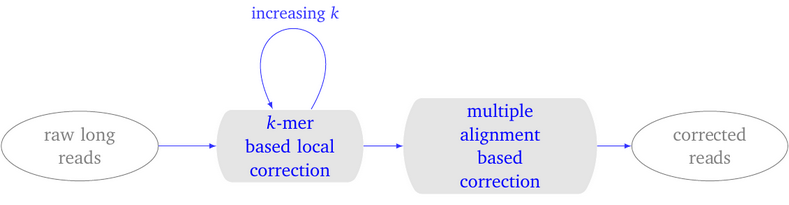
Overview LoRMA is an error correction program for long reads, which are sequences obtained using the third generation of sequencing technologies (3GS), either with Oxford Nanopore technology or with Pacific Biosciences technology. LoRMA is a so-called self-correction software, as opposed to e.g. LoRDEC that is a hybrid error correction tool. This means that LoRMA uses…
RSCU_RS: Measuring the bias in…
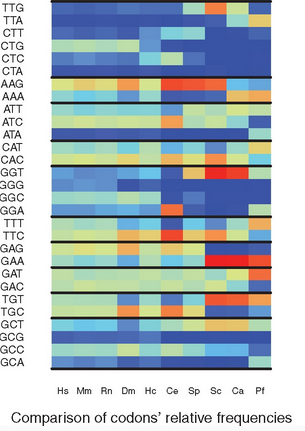
Overview Overview: In the protein coding sequences of a species, the 61 possible codons of the genetic code are not equally distributed. This observation is referred to as the Codon Usage Bias (CUB) of a species. Several measures have been proposed to quantify the CUB using the frequencies of codons in all RNA coding sequences…