FastME
FastME is a software package for the fast and accurate inference of phylogenetic trees from distance matrices. It implements algorithms based on the Balanced Minimum Evolution (BME) principle, a distance-based criterion closely related to the Neighbor Joining (NJ) method. The goal of the BME framework is to identify the phylogenetic tree that minimizes the total estimated evolutionary distance among taxa.
Compared to classical Neighbor Joining approaches, FastME improves tree accuracy through efficient topological optimization procedures. After constructing an initial tree, the program refines the topology using rearrangement operations such as Nearest Neighbor Interchange (NNI) and Subtree Pruning and Regrafting (SPR). These optimization steps allow FastME to explore alternative tree topologies and identify trees with shorter total branch lengths while maintaining a computational cost comparable to NJ.
FastME supports multiple types of input data, including DNA sequences, protein sequences, or precomputed distance matrices, and provides several methods for evolutionary distance estimation. The software also includes features such as bootstrap analysis for branch support, parallel computation, and several tree refinement strategies.
Thanks to its combination of speed, scalability, and accuracy, FastME is widely used for phylogenetic reconstruction, particularly for large datasets where likelihood-based approaches may be computationally demanding.
Reference: Lefort V., Desper R., Gascuel O. (2015). FastME 2.0: A Comprehensive, Accurate, and Fast Distance-Based Phylogeny Inference Program. Molecular Biology and Evolution, 32(10), 2798–2800.
FastME online execution
Execution API: Checking…
Submitting an analysis is subject to the Terms of Use. The privacy policy explains how submitted data and notification emails are processed. Audience cookies are optional and are not required to run an analysis.

Other tools
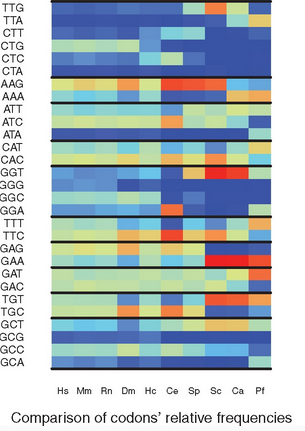
RSCU_RS: Measuring the bias in…
Overview Overview: In the protein coding sequences of a species, the 61 possible codons of the genetic code are not equally distributed. This observation is referred to as the Codon Usage Bias (CUB) of a species. Several measures have been proposed to quantify the CUB using the frequencies of codons in all RNA coding sequences…
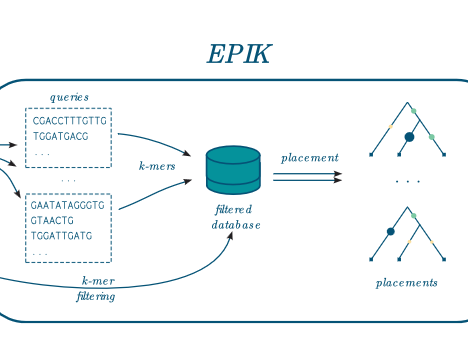
EPIK: Precise and scalable evolutionary…
EPIK is a program dedicated to « Phylogenetic Placement » (PP) of metagenomic or metabarcoding reads on a reference tree. It is similar in spirit and technically the successor of RAPPAS (Linard et al. 2020). EPIK achieves identical or slightly better accuracy than RAPPAS and outperforms it in speed and flexibility. In many aspects the documentation of RAPPAS…

MYST : Manage Your Scientific…
What is MYST? MYST is the orchestration platform behind ATGC online bioinformatics services. It provides a unified web interface and a public REST API to submit analyses, monitor jobs, and retrieve results across a growing catalog of phylogenetic and sequence-analysis tools. MYST is a modernized redesign of WAVES, an older tool previously developped by ATGC…